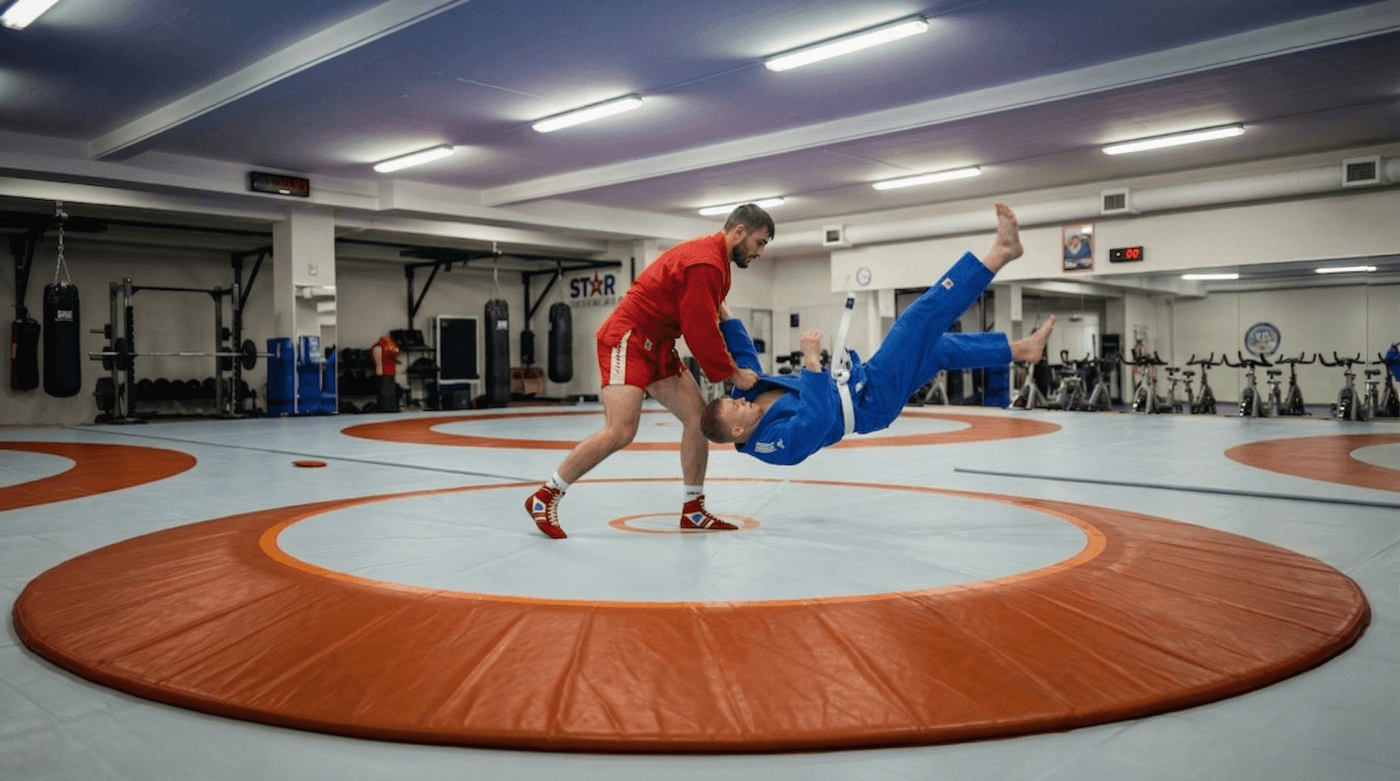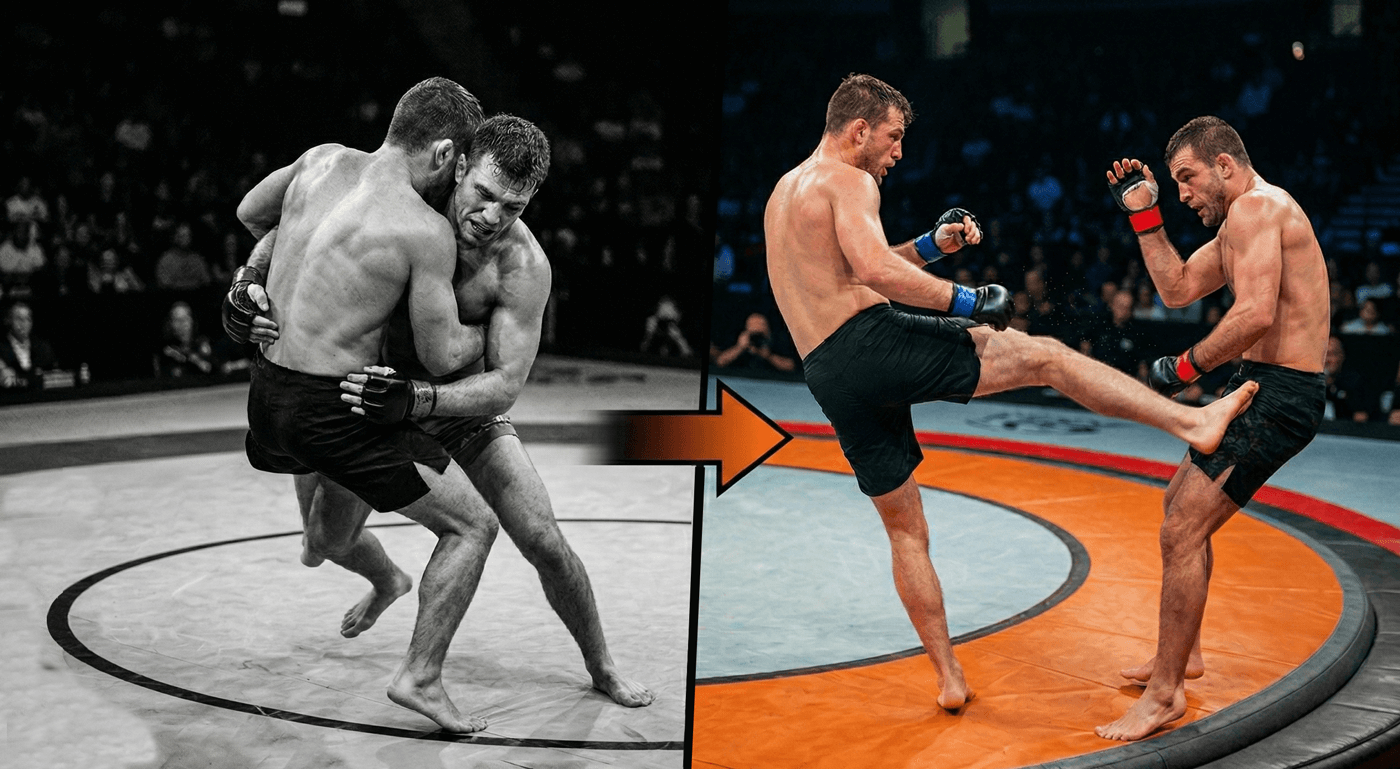
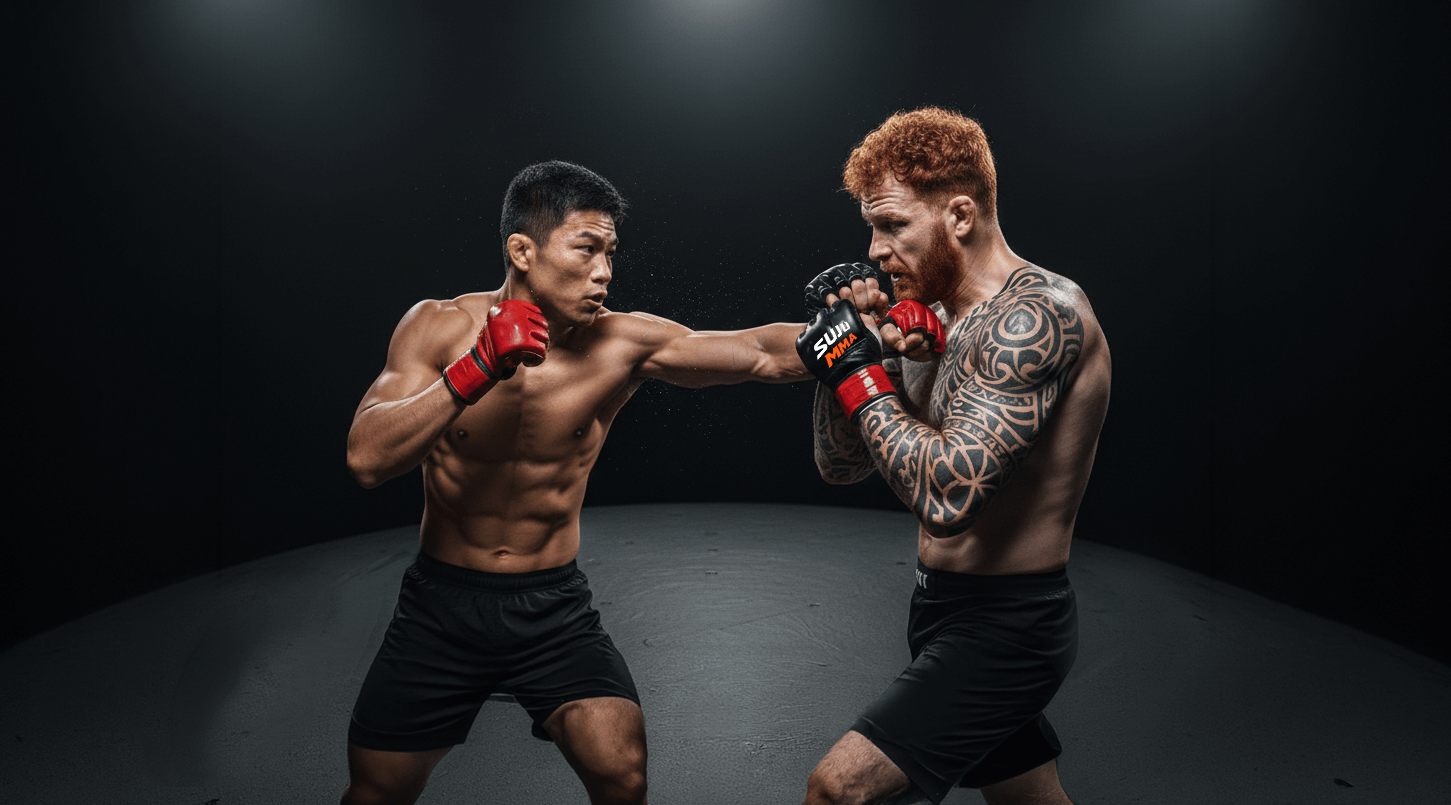
In most MMA formats, striking is always “on.” You can threaten it at any second, even if you never throw. That constant possibility shapes everything, from stance, entries, clinch risk, and how people move when they’re tired.
SUJU MMA is different by design. In the standard ruleset, the match begins in a non-striking face-off where fighters battle for center control. Then, at a very specific moment, the bout flips into a new phase: the ref calls “Fight,” and striking becomes legal. That rule is what people mean when they say “strikes activate” but the real concept isn’t a gimmick or a punishment phase. It’s a fight-state change (you can think of it as a gear shift) that forces instant strategic recalibration.
If you coach it correctly, it becomes one of the cleanest teaching tools in combat sports: you can literally train the moment a fighter must switch brains, from ring control and wrestling physics to damage windows and counter timing, without changing opponents, without changing rounds, and without a cage to “save” bad footwork.
Table of Contents
What “strikes activate” means and the “fight” command
In standard SUJU MMA, fighters start in a Face-Off state where closed-fist punching is not allowed (open-hand thrusts are allowed), and both athletes compete to control the center ring through clinch work, pushing, pulling, and takedown attempts.
Strikes become legal only after a fighter leaves the center ring. The moment a fighter steps or is thrown outside the center ring, the ref calls “Fight”, and the match enters a new state where full striking is permitted (within the standard strike rules).
That’s the “strikes activate” rule.
A useful coaching sentence is:
“In SUJU, you earn the right to strike by forcing the fight out of the center ring.”
It’s not a pause. It’s not a gimmick. It’s the sport’s core loop: Face-Off → Fight-state change → Reset → Face-Off again, repeatable multiple times in a round.
The exact strike trigger + edge cases
Exact trigger (standard ruleset)
- Trigger: A fighter steps or is thrown outside the center ring.
- Ref call: “Fight”
- Result: Strikes are now legal (subject to grounded-opponent rules).
Edge case: “ring-out + takedown” at the same time
Your standard scoring recognizes the combo (center ring-out + takedown) as a higher-value outcome, and in standard rules the match resets to face-off again after that exchange (i.e., striking does not become a continuing factor in that same moment).
Variation note: “Mound and Pound” (ground-and-pound allowance)
If you’re running the ground-and-pound variation (your “Mound and Pound”), the exchange can continue briefly on the ground after the combo, creating a short finishing window for submission, KO/TKO, or ref stoppage. (This is a variation; keep your main teaching anchored to standard rules, then introduce this as an add-on.)
After a reset: is the loop repeatable?
Yes, explicitly teach it as a repeatable loop: reset → face-off → trigger → fight → reset. This is foundational for coaches because athletes will otherwise assume “once striking is on, it stays on.” SUJU is intentionally not that.
Why the rule exists
From a sport-design standpoint, SUJU’s state change does three big things:
A) It creates a clean, watchable turning point
Spectators can understand: center battle → someone loses the ring → Fight. That’s a dramatic “chapter break” without needing a bell, a cage wall, or a referee lecture. Your FAQ frames this as a qualifying moment that escalates the match.
B) It prevents stalling without constant ref intervention
In a normal MMA round, fighters can stall in the clinch because the cage helps hold position and makes disengagement costly. In SUJU, the environment and scoring push athletes toward decisive action: either win center, force the trigger, or risk being forced out yourself. The rules also include structured resets and penalties tied to readiness, which keeps the pace honest.
C) It rewards “real ring control” as a skill, not a vibe
Combat sports have always valued ring craft, but SUJU formalizes it. The platform itself (including The Mound™ concept with a measured decline and rise) makes footwork and balance part of the strategy, especially near edges where small stance errors become scoring events.
If you want a parallel athletes already respect: wrestling and sumo both encode boundary control into the rule structure. United World Wrestling explicitly awards points for stepping out in defined situations, emphasizing edge awareness as a competitive skill. And sumo’s simplest win condition is forcing an opponent out of the ring.
SUJU is not “sumo MMA,” but it borrows the truth those sports prove: space is a weapon when rules make it matter.
Strategic implications for grapplers (pressure, exits, baiting the trigger)
If you coach grapplers in SUJU, the biggest mindset shift is this:
Your job isn’t only to take the opponent down. Your job is to steer the opponent’s feet.
1) Steering beats chasing (ring geometry is the takedown setup)
Your job is to cut off your opponent’s exits and guide where their feet have to go, reliably forcing the step-out (and the fight-state change) instead of wasting energy pursuing them around the ring.
On a flat mat, a sloppy shot can still work because you can sprawl, re-shoot, and the fence might bail you out later. In SUJU, the center ring is the economy. Grapplers should think in wedges:
- Step to cut off an exit
- Hand-fight to freeze posture
- Snap/drag to turn shoulders
- Pressure the hips so feet must move
Steering creates two wins:
- The opponent steps out (trigger + scoring context), or
- The opponent over-corrects and gives the hips for a real takedown.
2) Chain wrestling becomes ring wrestling
The classic chain-wrestling principle is “don’t stop after the first defense.” SUJU adds: “don’t stop until the feet are where you want them.”
High-percentage SUJU chain examples:
- Collar tie → snap → go-behind threat → opponent backpedals → angle cut → ring-out threat
- Under hook pressure → head position → hip turn → mat-return style bump → forced step outside center ring
- Body lock → short shucks and re-locks → “walk” the opponent toward the line
3) Throw selection changes because footing changes
If you’re training on The Mound, slope awareness matters. Your platform design notes a decline in the 2–5 degree range, with a 10–20 cm rise depending on build and venue. That’s enough to influence:
- Where weight transfers on reaps
- How far a whizzer can rotate safely
- How easy it is to slip when feet are square near the boundary
So coach throws like you’re coaching them for reality:
- Prioritize control throws over “launch throws” in early pilots
- Teach athletes to finish with chest-to-chest connection and stable base
- Teach exits that don’t require a giant step backward (more on that in mistakes)
A helpful reference lens is judo’s emphasis on continuity of action and clear technique. If you lose continuity, you lose the moment. In SUJU, continuity isn’t just about scoring elegance, it’s about not falling into the wrong state at the wrong time.
4) Baiting the trigger (strategic objective, not just consequence)
Because the fight-state change is valuable, grapplers can bait the trigger:
- Threaten a takedown to force retreat
- Fake a body lock to make the opponent turn and step
- Pull the opponent’s posture forward so their feet drift wide
- “Soft push” into a hard angle cut that forces an accidental step-out
This is where early adopters become innovators: your gym will discover which combinations consistently force the trigger without giving up inside position. Please share your experience online and let us know what you think!
Strategic implications for strikers (ring cutting, timing, counter windows)
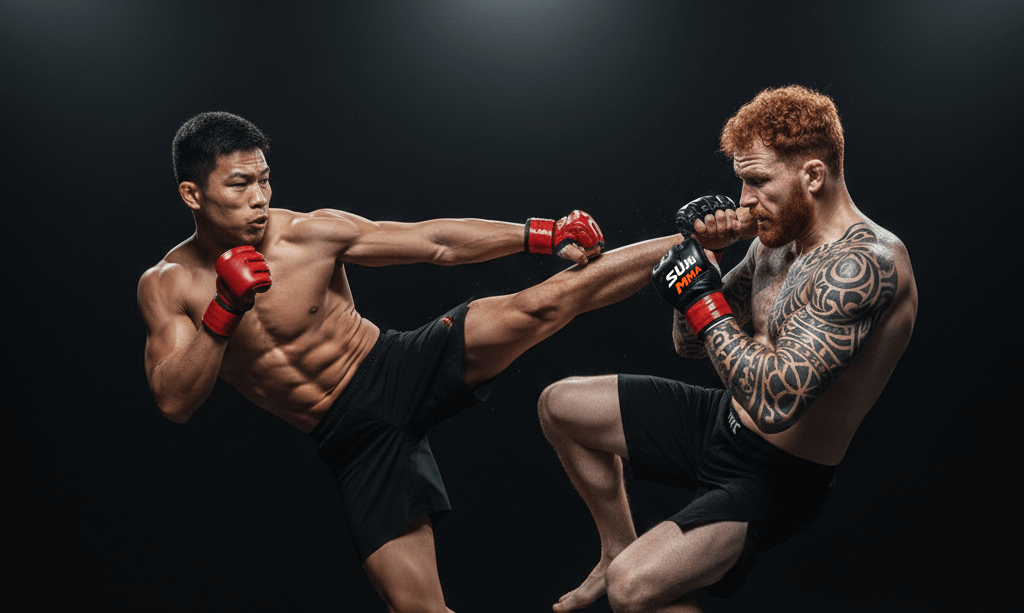
For strikers, SUJU rewards a rare blend: boxing-style ring cutting plus wrestling-grade balance plus instant mode switching.
1) Before “Fight,” your hands still matter (even if punches don’t)
In standard rules, face-off limits striking, but your rules allow open-hand thrusting in the Face-Off state. Coach strikers to use that legally to:
- Disrupt posture (sternum/throat-line framing without grabbing)
- Break grips and create space
- “Post and pivot” to keep center
You’re not trying to win with damage yet, you’re trying to win with positioning so that when the “Fight” command is called, you start that phase on your terms.
2) Ring cutting without a cage demands better footwork
In a cage, bad ring cutting still works sometimes because the fence eventually catches the opponent. In SUJU, there is no wall. So you teach the classic pressure principle:
Don’t chase. Cut off.
A practical coaching cue:
- “Front foot steps to the outside of their lead foot. Then your rear foot follows. Keep the door closed.”
If you want athletes to see ring-control thinking in other sports, look at how boundary rules create scoring incentives in wrestling (step-out scoring frameworks).
3) Timing the “Fight” call = timing the first legal damage window
The best strikers will treat the trigger moment like a trap door:
- They force the opponent to step out
- They anticipate “Fight”
- They’re already in position to land first
That “first legal exchange” matters because it often happens while one fighter is still recovering from a shove, a turn, or a stumble at the line.
4) Grounded-opponent rule changes follow-ups (and creates feint value)
The standard rules emphasize no strikes to a grounded opponent, and define grounded carefully enough that timing and footing become tactical.
This changes striker behavior in a good way:
- You can’t rely on cheap follow-up shots when someone posts a knee.
- You must learn to re-angle and force them back to standing if you want damage.
- You can feint strikes to force a panic knee drop, then pivot to ring-out pressure or clinch.
If you’re testing the “Mound and Pound” variation, you teach a second layer: once allowed, the ground fight window becomes a finishing sprint but only after the sport’s core loop has already created escalation.
Micro-strategies coaches can start testing immediately
Here are “mini game plans” that fit SUJU’s fight state-change logic and are easy to drill. Over time newly established techniques will begin to build as adoption builds. Become an early adopter or pioneer and help the sport grow!
1) Level-feint → retreat → angle cut → trigger → first strike
- Feint a shot (no commitment)
- Opponent retreats (center loss risk)
- Angle step to cut off the exit
- Force the step outside center ring
- On “Fight,” throw the first clean combo while they’re still moving
2) Underhook pressure → shoulder turn → forced step-out
- Win underhook + head position
- Walk them with short steps (no big lunges)
- Turn their shoulders toward the line
- Trigger Fight on the step-out
- Immediately transition to strike-clinch (knees/short punches depending on your standard legality)
3) Post + pivot defense (anti-ring-out)
- Teach athletes to momentarily post with open hand (legal in face-off)
- Pivot, don’t back straight up
- If they must exit, exit on an angle with stance intact
- The goal is to avoid giving the opponent a clean trigger moment and avoid losing balance on the slope.
4) Reset speed as a weapon
Resets are not “dead time.” Your rules make readiness meaningful (including penalties tied to reset timing).
So train athletes to:
- Breathe fast
- Recompose fast
- Reset to face-off marks fast
- Start the next face-off like a sprint
Common mistakes and how to fix them
These are examples of what can happen when athletes bring cage habits into an open, ring-scored environment.
Mistake 1: Backing straight out after pressure
- Why it fails: Straight backpedals give the opponent the easiest steering line.
- Fix: Drill “L-step exits” and pivots. Make athletes exit in triangles, not lines.
Mistake 2: Over-committing before the trigger (getting clinched/dragged)
- Why it fails: If you lunge for the moment, you give hips and posture.
- Fix: Teach “pressure without reaching.” The feet move first; hands follow.
Mistake 3: Ignoring slope/edge physics (footing, balance, slipping)
- Why it fails: A 2–5 degree decline is subtle until you’re squared up and resisting a shove.
- Fix: Build “edge rounds” where athletes must circle near the boundary without stepping out, focusing on stance width and weight distribution.
Mistake 4: Assuming strikes stay legal after a reset
- Why it fails: It breaks the sport’s logic and leads to gym misinformation.
- Fix: Make athletes verbally call states in sparring: “Face-Off” vs “Fight.”
Mistake 5: Not resetting fast enough (penalties / round loss risk)
- Why it fails: SUJU punishes slow readiness, which kills pace and invites gamesmanship.
- Fix: Treat resets like sprint intervals. Coach calls “10 seconds” like a shot clock.
Drills to train for the striking transition moment
These assume most gyms will start on The Flat Mound (taped rings on a mat), with notes for Mound builds.
Drill 1: “Fight State Switch Walkthrough”
Goal: Perfect understanding of striking trigger + immediate behavior.
Coach script (3 minutes total):
- 30s: Face-Off only (no strikes). Athlete A tries to steer; Athlete B tries to hold center.
- Coach calls: “Ring-out!” (simulate center step-out) → “FIGHT!”
- 10s: Light technical striking (touch contact) while standing.
- Coach calls: “Takedown!” (simulate) → “RESET!”
- 10s: Reset to marks. Coach counts down from 10.
Repeat 3 times.
Key coaching cues:
- “Don’t back straight out.”
- “When “Fight” is called, eyes up and hands return immediately.”
- “Reset like it matters.”
Drill 2: “Trigger Hunt”
Goal: Build strategic objective thinking, forcing the trigger on purpose.
Rounds: 5 x 1 minute, alternating roles.
- First 30s: Face-Off state only. Score 2 point each time you force the opponent to step outside center ring.
- Second 30s: On trigger, ref calls “Fight” and you get a 15s strike window (moderate contact), then reset.
Add a constraint: The defending athlete must attempt a pivot exit (no straight backpedal allowed). This forces realistic learning.
Drill 3: “Live Transition Sparring” (LIVE, controlled)
Safety: For early pilots, recommend headgear and shin guards while athletes learn timing and footing (subject to change as the sport evolves).
Rounds: 3 x 2 minutes
- Coach acts as ref.
- Real Face-Off behavior until trigger.
- On “Fight,” allow live striking (within gym intensity rules).
- Enforce grounded-opponent rule strictly (and briefly note the Mound and Pound variation if you’re testing it).
- Reset discipline: count out loud to 10.
Scoring for the drill: Use your SUJU scoring logic as the “scoreboard,” not just damage.
SUJU MMA’s “Strikes Activate” rule is a pioneering element in combat sports, creating a clean, high-stakes turning point that prevents stalling and rewards mastery of space. The innovative challenge is now in the hands of the early adopters. By focusing on the nuances of The Mound, perfecting techniques that steer the opponent’s feet, and drilling the lightning-fast transition from Face-Off to Fight, you are not just teaching rules, you are defining the future of the sport.
We encourage all coaches and athletes to test these frameworks, share their discoveries, and help build the library of high-percentage SUJU techniques that will propel this new format forward.
SUJU Resources:
- SUJU Rules: https://sujumma.com/suju-rules/
- The Mound: https://sujumma.com/the-mound/
- FAQs: https://sujumma.com/faqs/
Want to compare the rules of SUJU MMA against other popular combat sports?
Combat Sport Rule Resources:
- United World Wrestling rules (step-out concept reference): https://cdn.uww.org/2025-12/wrestling_rules.pdf
- USA Sumo rules (ring-out concept reference): https://www.usasumo.com/learn/rules-techniques/
- IJF rules explanations (continuity / technique lens): https://rules.ijf.org/
- UFC Performance Institute Journal (training/resource reference): https://www.ufcpi.com/journal
- WBC Muaythai rules (striking weapons/scoring reference): https://www.wbcmuaythai.com/rules-regulations